C. Richardson - Elon University
TEACHING
What is my teaching philosophy?
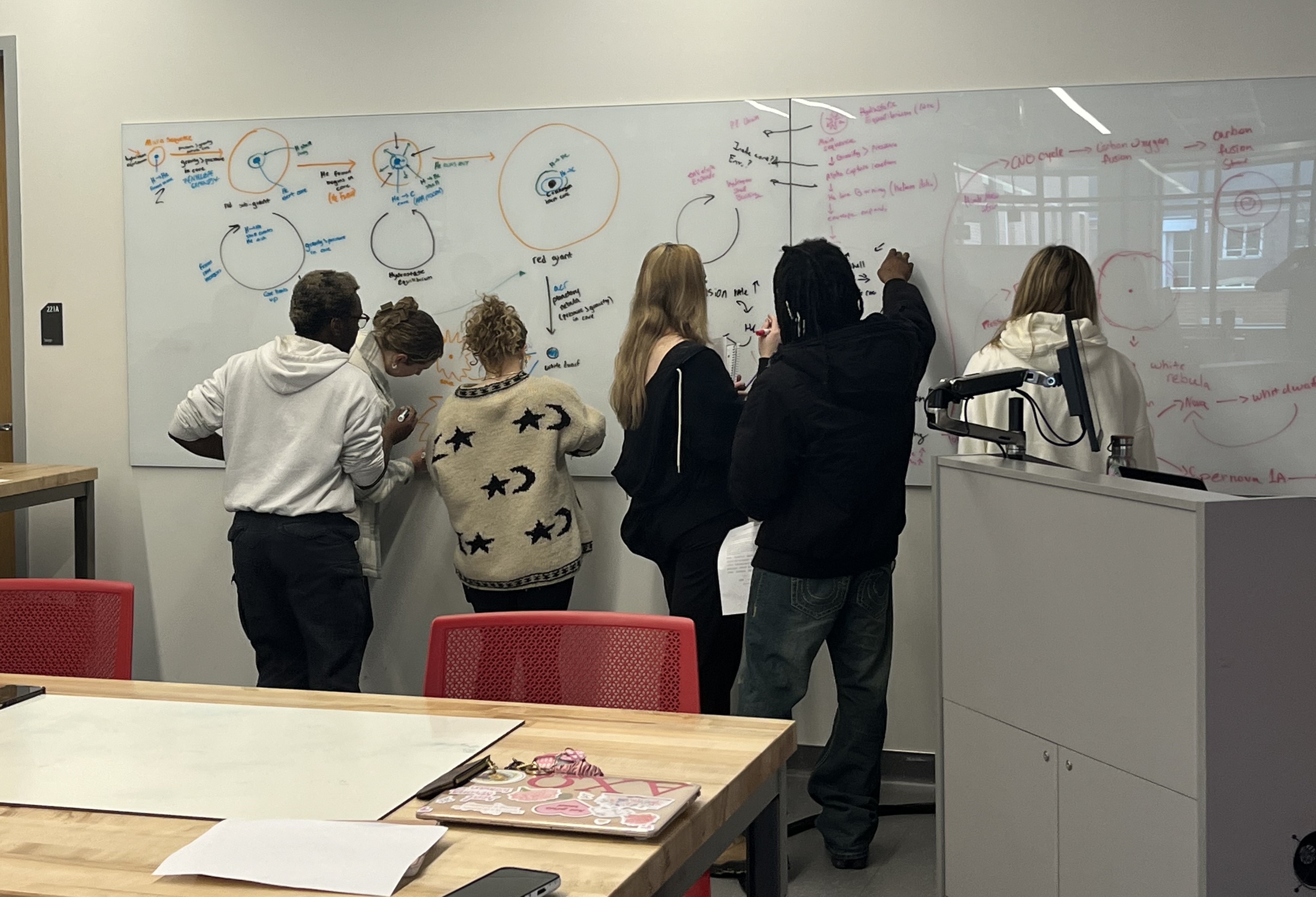 I strive to provide an equitable, collaborative learning environment for students that encourages them to ask questions and work with one another to deepen their understanding of the material. One of the primary motivations behind my teaching in this era of information overload is to give students an experience they can't replicate by searching online or asking ChatGPT. Compiling information often doesn't translate into knowledge, as educational research strongly indicates that knowledge is best acquired when students are actively engaged with their peers. My pedagogy centers on continually reflecting on and revising my teaching based on peer and student feedback, as well as attending workshops on evidence-based methods to enhance student learning. I maintain a high standard of achievement while creating a low-pressure, fun space that is adaptable to students from all backgrounds.
What is my classroom like?
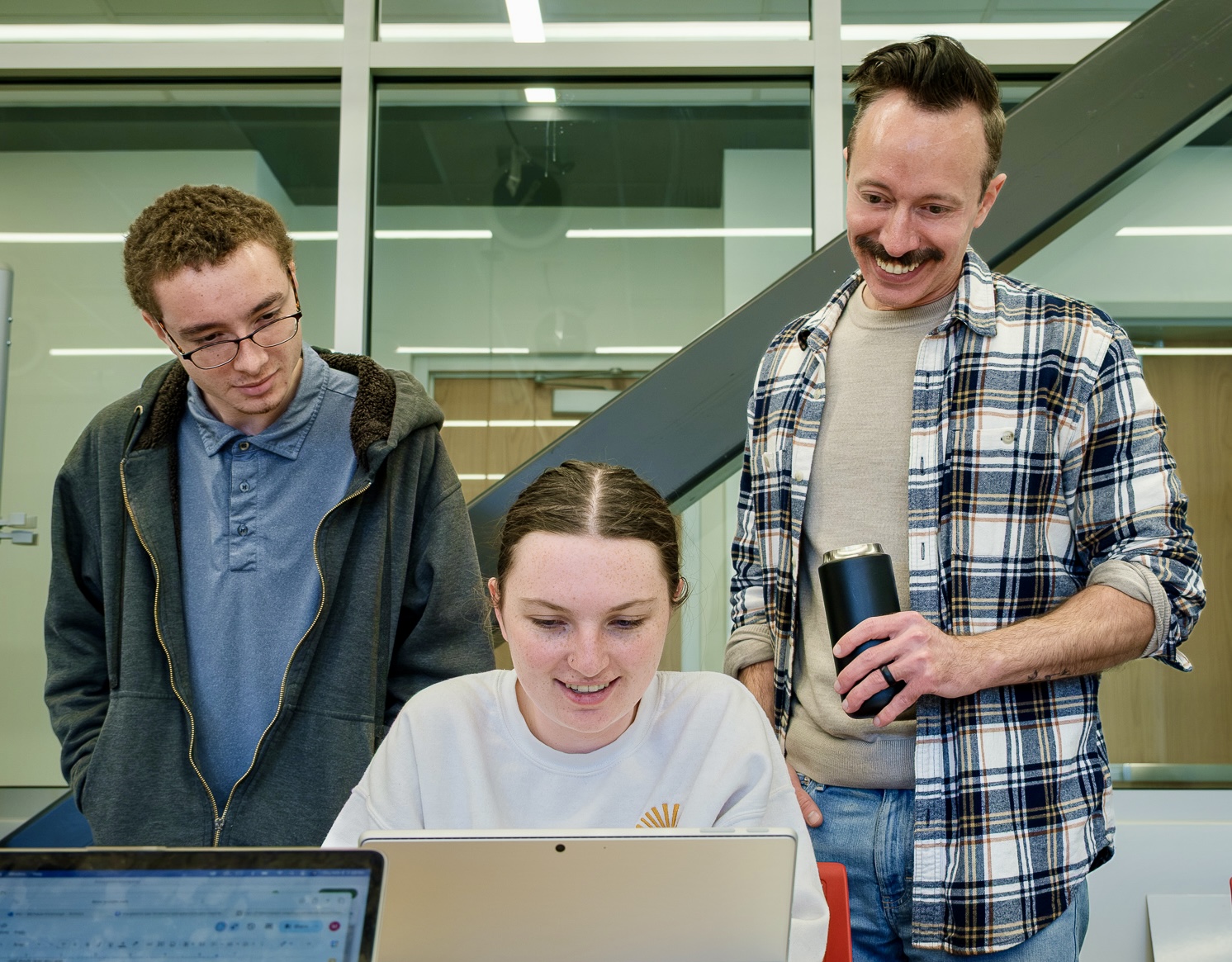 I minimize traditional lecture (standing in front of the room and talking) as much as possible to foster a student-focused classroom. I frequently ask students to work in groups to respond to poll questions, complete worksheets, and develop solutions on small whiteboards. I encourage students to ask questions of each other and me, while I primarily use Socratic dialogue to answer them. Being an active researcher enables me to incorporate the most recent astronomical discoveries that won't be found in textbooks for many years to come. The cutting-edge facilities that Elon University provides enable me to create scaffolded assignments in which students progressively build skills in oral presentations, science writing, and computational analysis. I develop Python Jupyter Notebooks as educational tools for upper-level astronomy courses, which you can freely use as part of the Enhancing Science Courses by Integrating Python (ESCIP) collaboration.