Dr. Rissa M. Trachman, RPA
Elon University
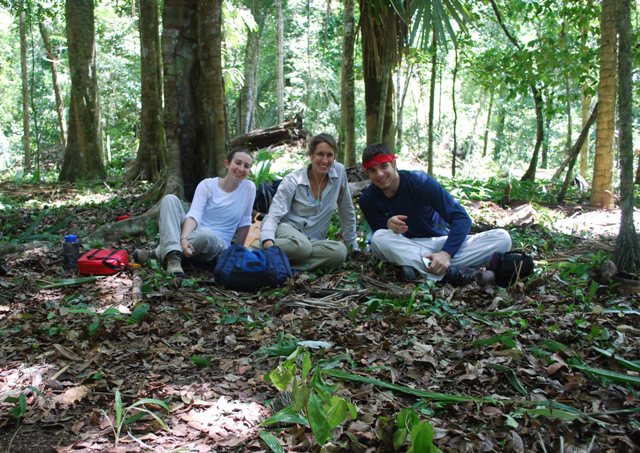
Summer Archaeology in Belize
About the field school-
Students will be participating in original archaeological field research with Dr. Trachman from Elon University at the site of Dos Hombres, Belize. The field school format ensures students will have the academic rigor of learning about archaeological field methods, and ancient Maya culture, along with the experience and excitement of real archaeological discovery.
Field school students will stay in the R.E.W. Adams Research Facility (the archaeology camp) situated in a conservation and management area that is somewhat remote. The Rio Bravo Conservation and Management Area (RBCMA) is located in northwestern Belize and is comprised of 250,000 acres of protected tropical forest. As a result, students have a very unique opportunity to experience life in a communal/cooperative camp setting. Water, electricity, and the usual comforts of home are limited at best and many of them, such as TV and internet, are not available in camp.
Physical Requirements—Students will be required to
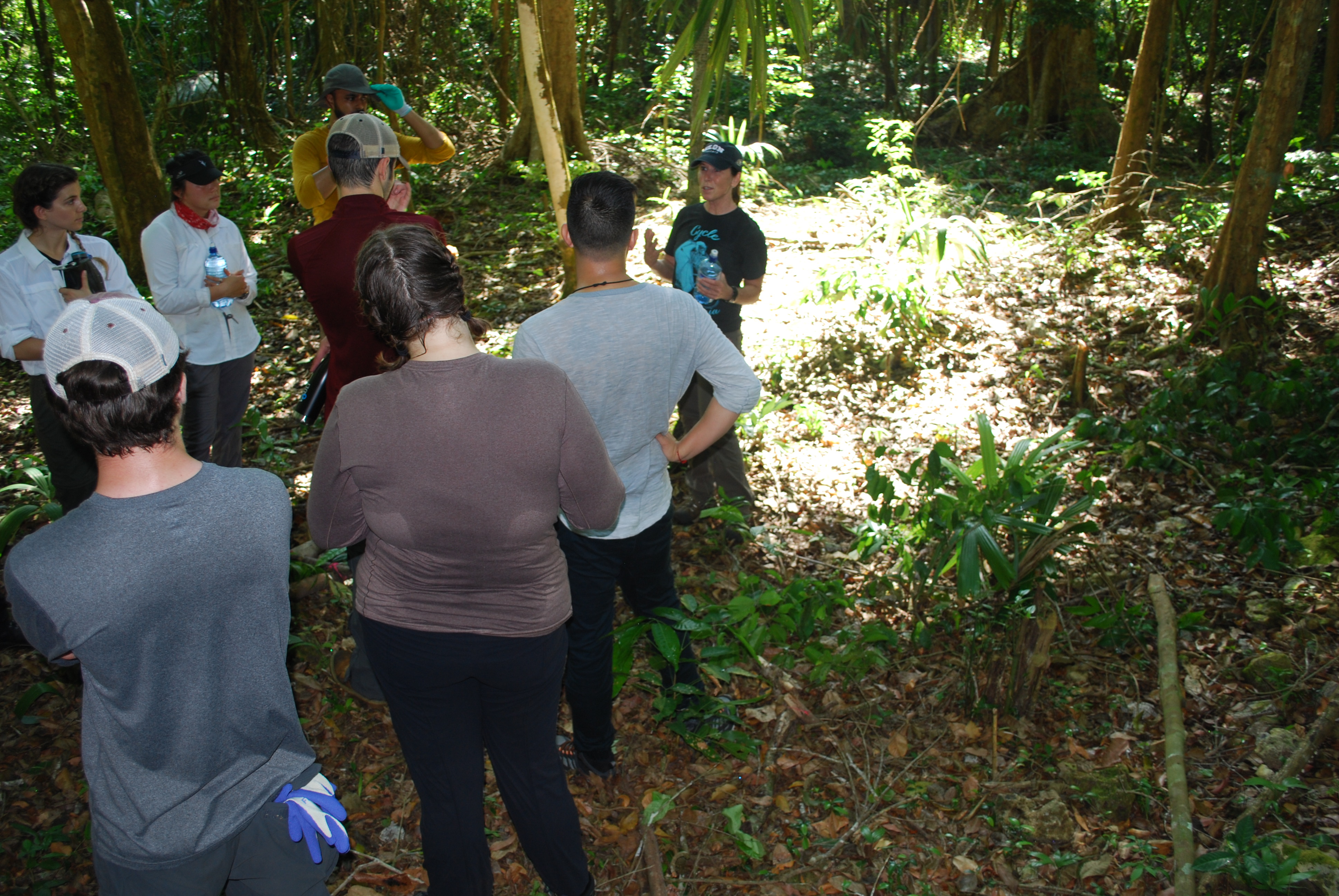
participate in every aspect of the archaeological fieldwork
conducted during the research of the archaeological site, both in
the field and in the field laboratory.
In order to participate in the daily fieldwork, students will
need to be physically able to hike one hour each day in order to
access the site. Also
many of the site tours will require this same physical ability.
Summer in Belize is the rainy season and the climate ranges from hot and humid to cool and rainy.
Students should anticipate both kinds of weather and should
drink plenty of water at all times.
The first day of the field school will be devoted to
acclimating (by drinking several liters of water) and orientations.
Outline
of a Typical Field Day
Below is the schedule of a typical field day. There will also be 3 assigned "lab" days for each student during the field school. Lab days occur on a rotating basis.
6:00 am
Early rise to prepare for the field day and perform camp chores
6:30 am
Breakfast and pack
lunch and water in day packs
7:00-7:30 am Leave camp-- drive then hike to archaeological site (Dos
Hombres)
8:00 am
Field instruction and field work
11:30 am
Lunch in the field
3:30 pm
Leave the field-- hike then drive back to camp
4:30 pm
Arrive back in camp
4:30-6:00 pm Shower and free time until dinner
6:00 pm
Dinner
7:00 pm
Lectures and other presentations or free time
8:30 pm
Quiet time, conversations must be a whisper at this time
9:00 pm
Lights out
Camp Life
The living situation includes full
time camping in either tents or the semi-permanent
dorm structure.
Electricity is
generated by a 10,000 watt generator that runs approximately three
hours in the morning to provide light for preparing our breakfast
and three hours in the evening for reading and study.
Additional light or electricity is sometimes available (on
sunny days) from electricity generated by solar panels.
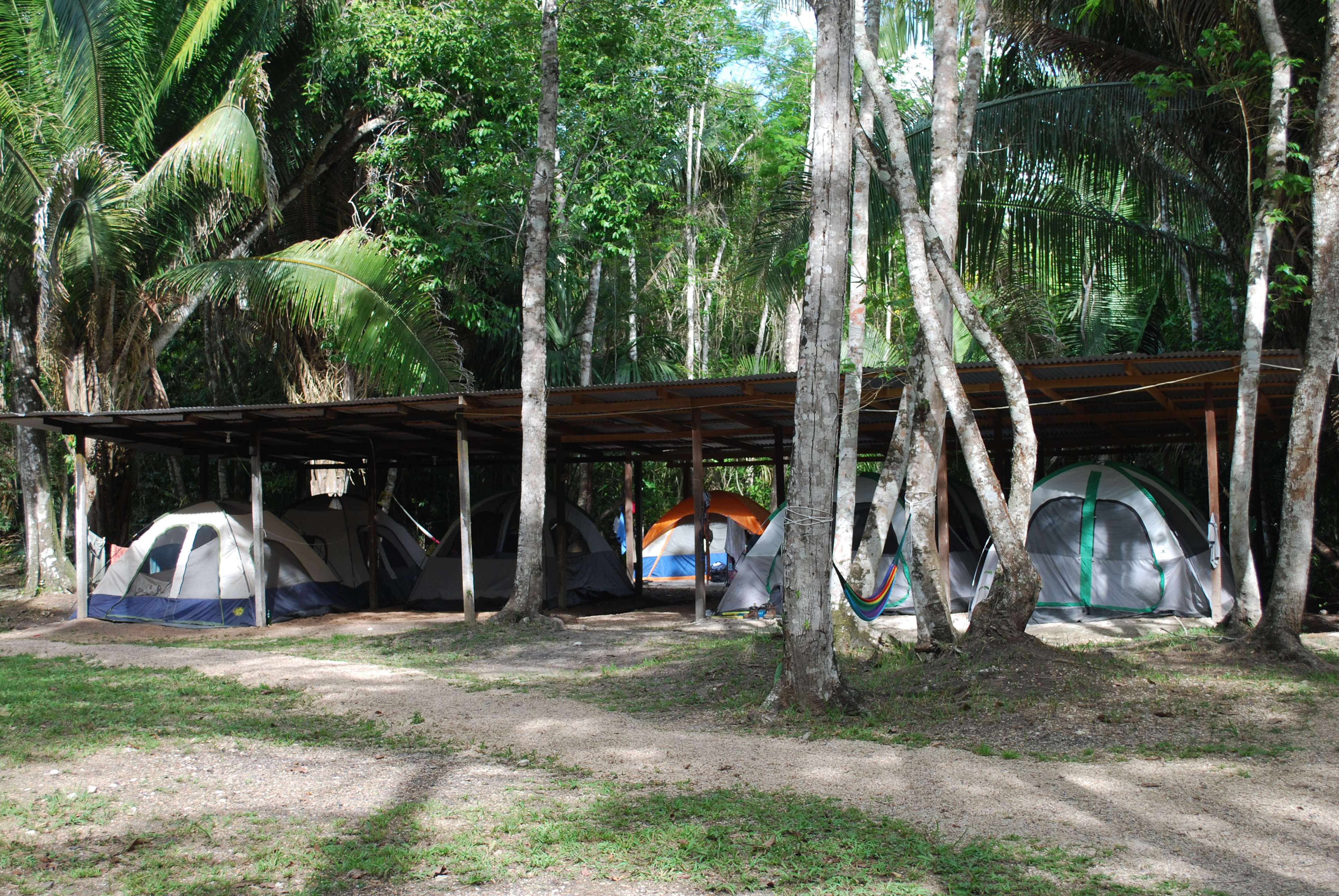
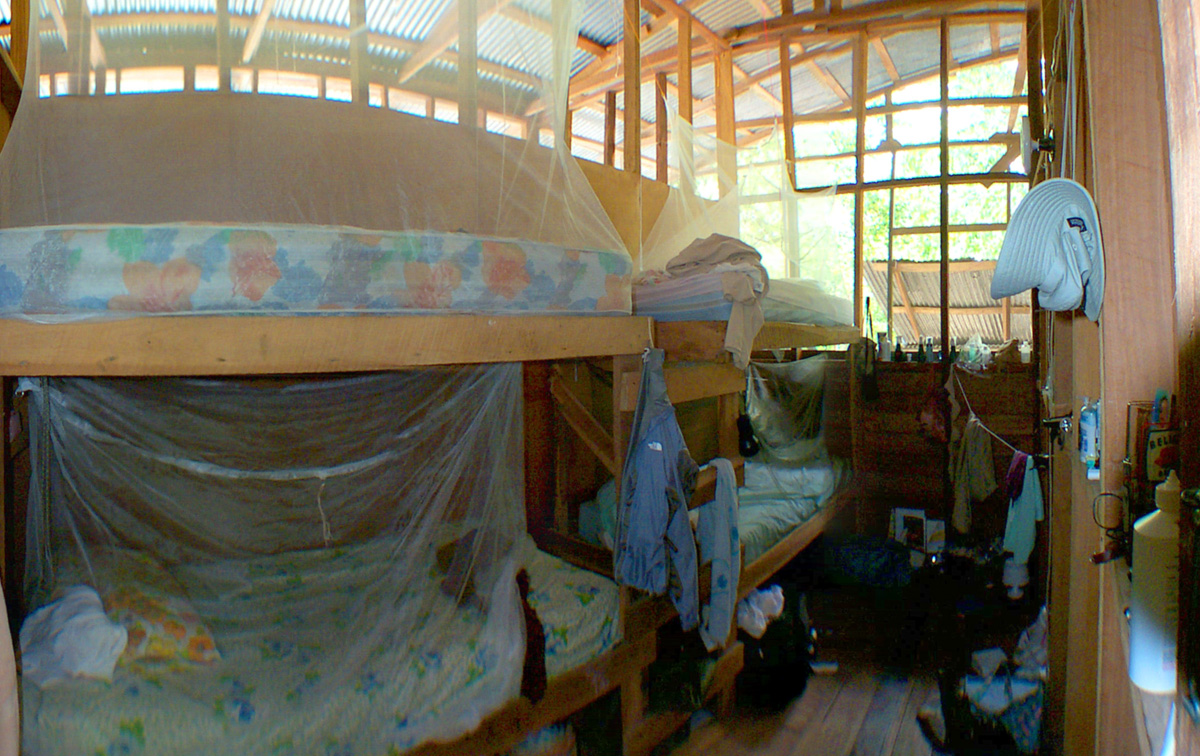
Camp life— The archaeology camp is set up to be a communal living situation. All students will be expected to adjust accordingly and will be graded as to their cooperation and conservation of the forest and its resources.
Food:
Local cooks are hired to prepare
Belizean-style food for meals.
Special diet needs are difficult to accommodate, and should
not be expected. However, we have found that in general
vegetarians diets work okay if you eat eggs and dairy.
Breakfast: beans, eggs, oatmeal, boiled plantains, cheese, buns, tortillas, fruit
(e.g. watermelon or bananas), coffee,
tea
Lunch: peanut butter and jelly sandwiches, canned tuna, canned meat
products, breakfast leftovers, fruit, tortillas, buns
Dinner: beans, rice, vegetables,
chicken, beef, or pork, and fruit
Drinks: filtered water is available 24 hours/day every day, "Kool-Aid", or
something
similar, is also available for free, and
Camp Chores:
Camp chores will be assigned to each student
on a rotating weekly
basis. Camp
chores include camp clean up, kitchen cleaning duty, washing
dinner dishes, sweeping dorm and lab, vehicle maintenance
(supervised),
recording water storage tank levels, and taking compostable
trash to the eco-
friendly biodegradable trash pit.
Students are expected to be able to
cooperate in the
carrying out of their camp duties and will be graded
accordingly.
Health- PLEASE CONSULT WITH ELON INTERNATIONAL PROGRAMS FOR INFORMATION ON REQIRED INTERNATIONAL TRAVEL HEALTH INSURANCE
(non-Elon students MUST purchase travel and health insurace, required)
Students should be sure that
recent medical and dental exams demonstrate that you are in good
health before travel.
Immunizations:
No immunizations are required, but please consult with your physician or a travel medicine specialist
Malaria
prevention:
Preventive malaria medication is also not required but
in Belize you may be at
risk for contracting Malaria. Please consult a travel health
professional to decide if you should take preventative medication.
What to bring-
You will need to have a passport and 2-3 copies of the photo page (one to be turned in to Dr. Trachman), see also the list below.
LIST OF REQUIRED AND RECOMMENDED ITEMS TO BRING
COMMUNICATION AND CONTACT INFO WHILE IN BELIZE
ArchAerial Video of the archaeology of Dos Hombres
Summer 2026 Field School
May 19 - June 12/16
(optional trip at the end; 4 days)
Contact Dr. Trachman with questions
Application and Due Dates
- Priority Application Deadline, December 12
- Regular Application Deadline, February 6, 2026
- Late Application Deadline (if space available), March 30, 2026
- April 1, 2026 - Balance of fees DUE
- APRIL 22, 2026; All forms and passport copy due
- May 1, 2026; Flight Itinerary and Proof of International Travel Health Insurance Due